
Photos & Editing by Author
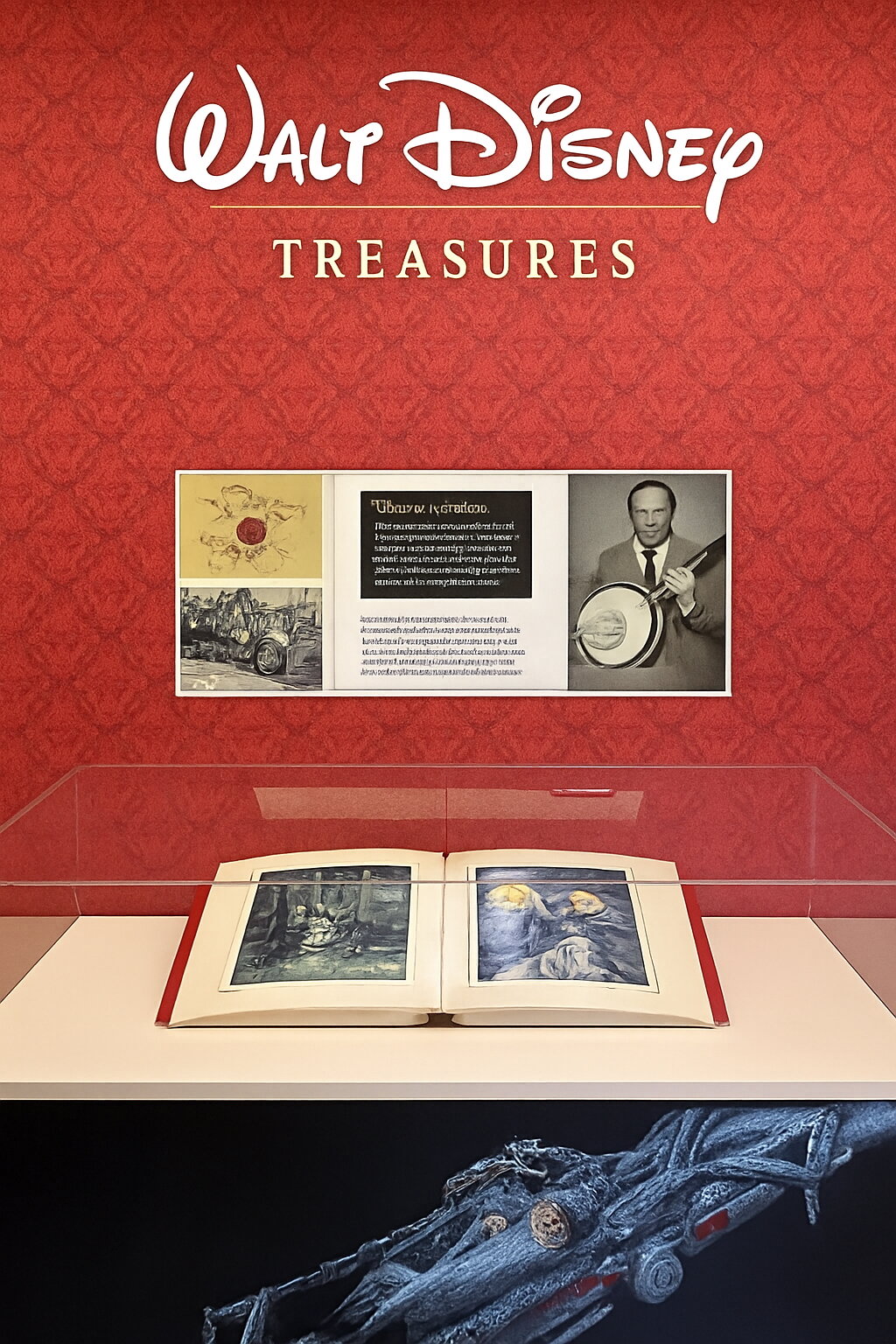
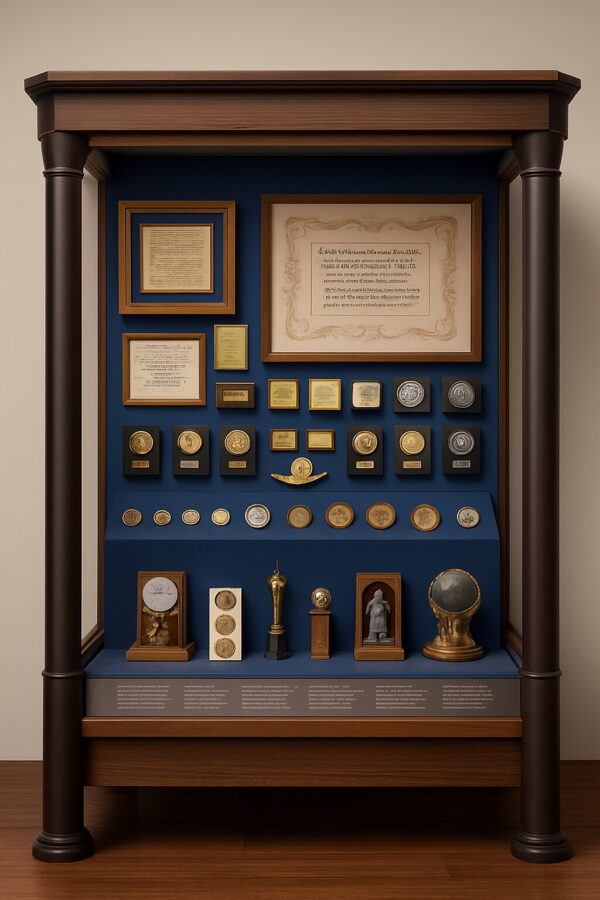
In a quiet corner of San Francisco’s Presidio lies an unassuming yet historically rich museum ―The Walt Disney Family Museum. Pushing open its heavy, vintage-style wooden doors, I was greeted by a crimson wall with the inscription: ‘The Treasures of Walt Disney.’ Rows of display cases stretched out, and under the soft glow of lighting and the reflection of glass, medals and certificates sparkled―26 Oscars, prototype statuettes, Golden Globes, Emmys, the Presidential Medal of Freedom, the French Legion of Honor, and many more, filling an entire hall. These awards not only affirm Disney’s personal brilliance but also signify his epoch-making influence in animation, cinema, theme parks, popular culture, and global business.

The museum, established by Disney’s daughter and grandson, is a sacred site for Disney fans around the world. More than showcasing original character designs and animation clips, it is like a ‘living biography’ that tells the story of a boy born into poverty, who, with a pencil and a dream, spent his life building the most influential entertainment empire of the twentieth century.
Walter Elias Disney was born in 1901 in rural Chicago. His father was a second-generation Irish immigrant, and the family struggled financially. Walt was passionate about drawing from a young age. He worked at a print shop in Kansas City and drew for advertising companies, using his pencil to tell stories. In 1918, during World War I, he falsified his age at sixteen to join the American Red Cross and went to France as an ambulance driver. Although he did not fight on the front lines, the experience broadened his worldview and deeply influenced the humanistic undertones in his later works.

After returning home, at the age of 20, he founded Laugh-O-Gram Studio and attempted to adapt European fairy tales into animated shorts. Although the company eventually went bankrupt, it planted the seed of his belief in ‘making fairy tales real.’ In August 1923, with only $40 in his pocket , he moved to Hollywood and founded the Disney Brothers Cartoon Studio. After early trials like the Alice Comedies and the creation of Oswald the Lucky Rabbit, he lost Oswald due to a copyright dispute in 1928.
During a train ride to New York, Walt conceived a more expressive character―Mickey Mouse. From the debut of Steamboat Willie, Mickey appeared on screen, signaling the start of the Disney era. Mickey was more than a cartoon; he became an American icon: optimistic, resilient, humorous, and endlessly creative. During the Great Depression, Mickey’s ever-smiling face and anthropomorphic charm brought hope and joy to countless people. The museum showcases early character sketches―Minnie’s sweetness, Donald Duck’s irritability, Goofy’s goofiness―each character vividly conveys personality and emotion, creating a rich cartoon universe that reflects the diverse roles and traits of real-world society.

Disney’s true breakthrough came in 1937 with the release of the landmark animated feature Snow White and the Seven Dwarfs. Based on a German folk tale, it was the first full-color, full-length animated film with synchronized sound. The film took three years and over $1.5 million to produce. Despite skepticism and financial risk, Walt believed ‘animation should not stop at laughter, but should reach the heart.’ At its premiere, the audience gave a standing ovation, and critics proclaimed that ‘cartoons are no longer just for children―they are now cinematic art.’ In 1939, it received a Special Academy Award for its groundbreaking impact. What followed were classics like Pinocchio, Dumbo, and Fantasia, ushering in Disney’s golden age.

Walt Disney
During World War II, Disney Studios produced over 100 educational and anti-fascist propaganda films, including Der Fuehrer’s Face starring Donald Duck and The New Spirit promoting tax-paying. Walt Disney became not only an artist but a ‘cultural warrior,’ using visual storytelling to rally against fascism.
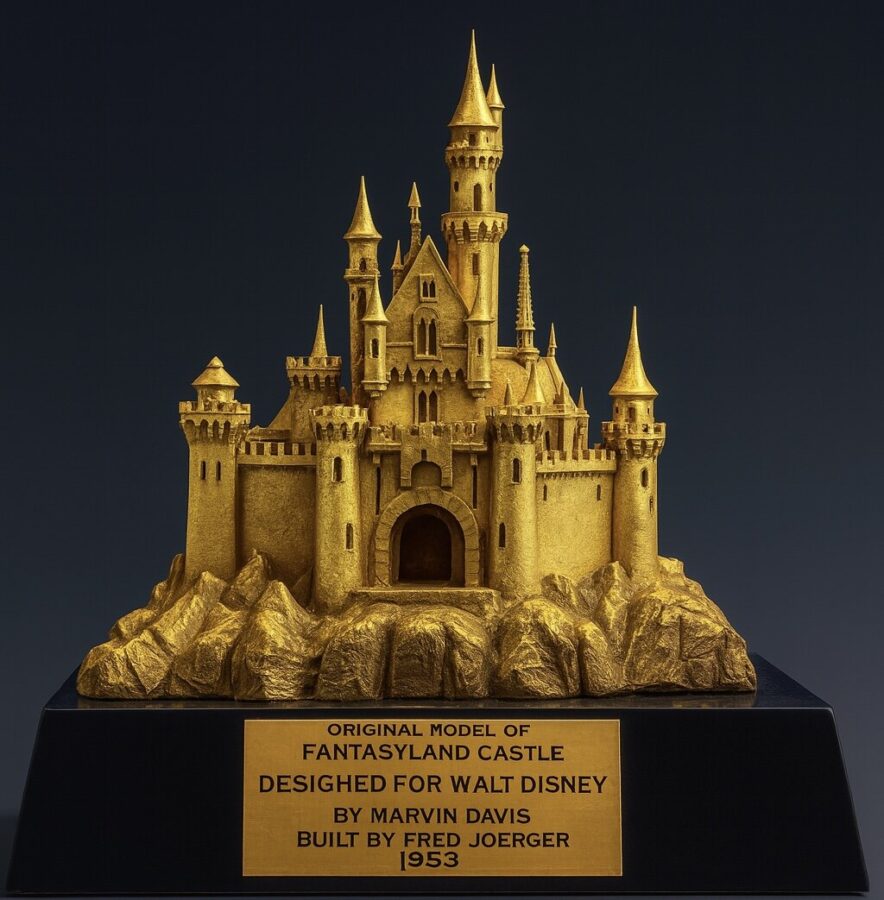
In 1955, Disneyland opened in Anaheim, California. It was not just an amusement park, but the world’s first fully realized narrative space. Walt brought the fantasy of films into real life, creating an immersive experience where visitors didn’t just watch stories―they stepped into them. Each park zone was a cultural allegory: Main Street, U.S.A. recalled nostalgia and small-town values; Tomorrowland envisioned human aspirations for the future; Adventureland celebrated curiosity about nature and the unknown. The park extended Disney’s values and created a timeless, family-oriented, educational, and entertaining experience.
Disneyland also redefined the business model of global entertainment. Beyond ticket sales, the ecosystem included merchandise, licensed brands, interactive shows, and narrative-driven commerce. The museum displays Mickey Mouse lunch boxes, plush toys, board games, and vinyl records from the 1930s―each a testament to Disney’s pioneering insight into what we now call the ‘IP economy.’ At the core of all this was Walt Disney’s insistence on quality and innovation. He understood that truly moving works must combine artistic warmth, technical precision, and cultural richness. He was both an artist and a strategist, constructing a sustainable, replicable, and globally resonant model for the cultural industries.

Walt Disney’s success was not merely a matter of personal ambition or talent―it was the product of a historical moment. Between the 1900s and 1930s, the U.S. faced industrialization, urbanization, war, and economic depression. People yearned for stories that offered hope, comfort, and unity. Disney’s work fulfilled that cultural need―offering fairy-tale dreams filled with practical courage and moral clarity. His fusion of fantasy and life became not only a national symbol but a global cultural monument.

Standing before the large glass window in the museum’s final gallery, gazing at the Golden Gate Bridge, I was overcome with emotion―admiration, awe, and respect. This museum preserves not only the legacy of the ‘father of cartoons’ but the life work of a master who used pen, sound, light, technology, and theme parks to create a spiritual home in the world of entertainment. On the wall of the Disneyland exhibit, a quote reads: ‘You can dream, create, design, and build the most wonderful place in the world. But it takes people to make the dream a reality.’ These are Walt’s own words―and the precious philosophy he left behind. He encouraged us to dream boldly and to work tirelessly to make those dreams come true.
Postscript: Happy birthday to my grandson Odie! He’ll turn three in just two weeks. One day, he excitedly told me, ‘Grandma, I’m going to Disney!’ His mom had just told him they would celebrate his birthday there. Seeing his joyful little face filled me with happiness. Walt Disney once said, ‘As long as you remember your childhood, you’ll never grow old.’ It brought back the memory of Odie’s Dad, Cliff, proposing to my daughter Helena at Disneyland―a beautiful sign of how deeply Disney’s entertainment culture resonates with generations of American families. 07/2025
Disclaimer: Some images used in this article were taken during our visit to the museum. If any copyright concerns arise, we will take immediate action to remove the content upon notification. Please reach out to us at info@betterconcept.net.