
By Sher Lee
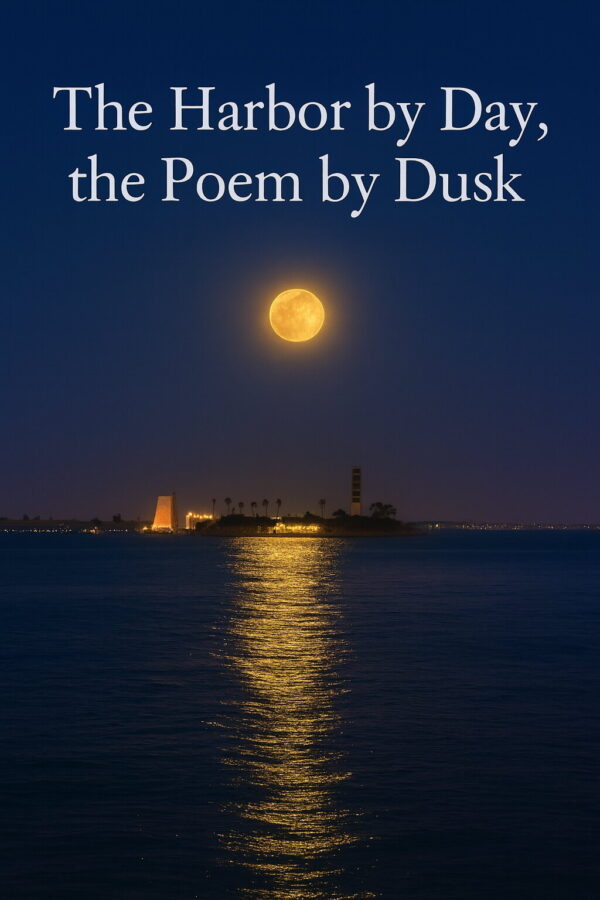
Along California’s southern coast lies a radiant jewel—Harbor of Long Beach. Between high-rises and bustling docks, it is hard to imagine this bay was once home to the Tongva people, native to the Los Angeles Basin and coastal Southern California. In the eighteenth century, Spanish settlers arrived, establishing missions and ranches that laid the form of a future city. By 1897 it was renamed “Long Beach,” a simple yet poetic name that bound it forever to the sea.

From the beginning, geography shaped its destiny. In 1911, the Port of Long Beach emerged on the mudflats of the Los Angeles River, no more than 800 acres. A harbor commission was formed in 1917; in 1924, residents approved a $5 million bond to expand its facilities. Oil discoveries soon brought prosperity, and before Hollywood’s rise, Long Beach even served briefly as a global center of silent film production.

The 1933 earthquake devastated the city, yet out of the rubble rose bold Art Deco structures, giving City of Long Beach a new face. In 1956, America’s first container terminal opened here, ushering in a revolution in ocean shipping. Expansion surged, and global giants like Toyota, Maersk, and Hanjin established terminals.
Much of the port’s land was reclaimed from the sea—a modern echo of the Chinese legend of Jingwei filling the ocean with stones.

By the late 1970s, as U.S.–China relations thawed, China Ocean Shipping Company (COSCO) launched its U.S. service here, choosing Long Beach as its first stop. The harbor became a vital bridge across the ocean. Today it is America’s second-largest container port, spanning nearly 13 square kilometers with more than 80 modern berths. It welcomes vessels from around the world, bringing goods that sustain daily American life, while exporting U.S. produce, machinery, and technology abroad.
For me, the port is not only history but lived experience. Since the early 1990s, we started import business has been tied to Long Beach.
I remember several dockworker strikes—some so severe that only presidential intervention could restore order. During the pandemic, container delays further crippled supply chains, with truckers sometimes waiting six hours for a single pickup. I also recall a year when freight costs soared, prompting us to visit the offices of shipping companies at the Port of Long Beach in search of answers. At times we went to bonded warehouses nearby to check on cargo ourselves. These experiences gave me not only an understanding of the port’s history, but also a deeply personal connection to its daily pulse.
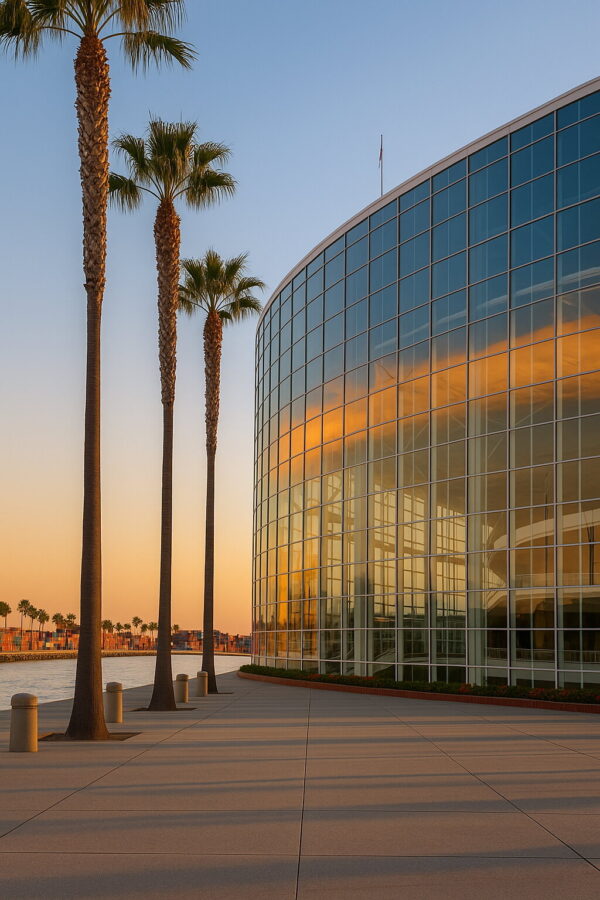
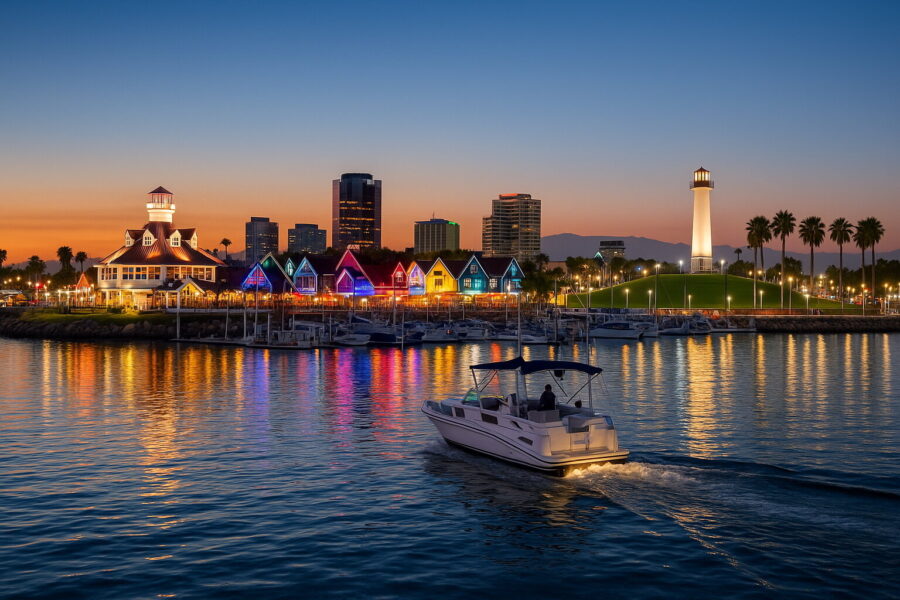
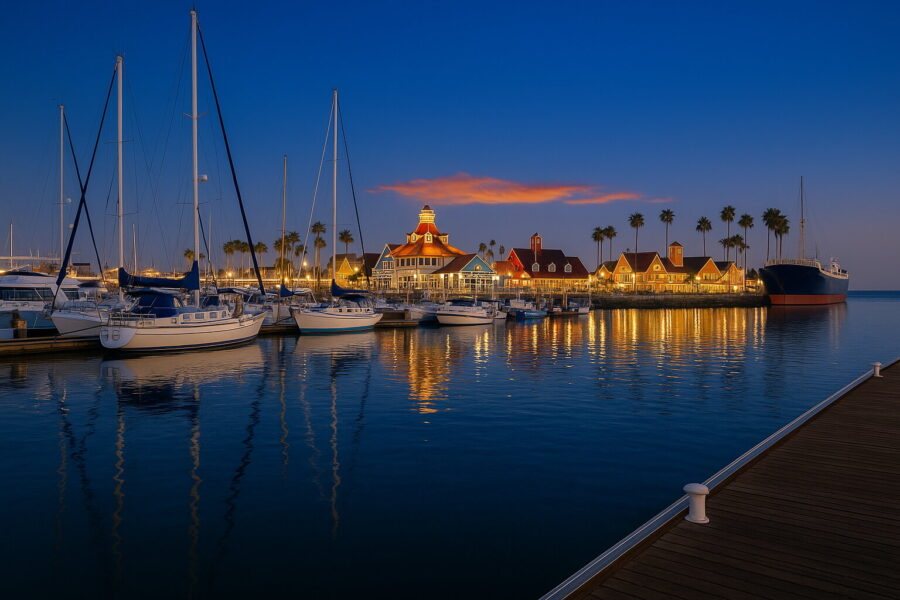
And yet, when the sun sets, the harbor reveals another face. The roar of cranes fades, replaced by the horns of leisure vessels. The spire of Parkers Lighthouse glows like a sentinel flame. Cruise ships slip away from Rainbow Harbor, gliding past the glass façade of the Convention Center and the blue dome of the Aquarium of the Pacific. In the distance, the Queen Mary rests with solemn grace. Once a luxury liner and later a World War II troopship, she bore witness to both war and peace. Now her red funnels glow like torches, her decks strung with lights like a suspended galaxy, an elegant guardian of the bay.

From the deck I watch the summer sea. The last glow of sunset scatters across rippling water. Small boats move unhurriedly, as if strolling on the ocean simply to savor its vastness. The evening breeze brushes my face, cool and salt-scented, carrying a calm that words can scarcely hold.

As twilight deepens, the silhouettes of oil islands rise, palm trees etched against the sky like watchful sentinels. Then the moon ascends, casting a silver path across the waves from the horizon to the ship’s bow. Each swell fractures the light into shards, only for them to gather again, shimmering endlessly like dreams upon the tide.
Long Beach is more than a port; it is a mosaic of life. California State University, Long Beach enriches the city with scholarship and the arts. Diverse immigrant communities—Latino, Asian, African American—infuse its streets with languages, music, and flavors from around the globe. After World War II, Long Beach was one of America’s fastest-growing cities. Today, with over 450,000 residents, it remains the second-largest city in Los Angeles County, a harbor of industry and of home.

In Long Beach, by day, cranes and cargo ships write the chapters of prosperity; by dusk, lights, sea breezes, and moonlight compose verses of romance. The rhythm of day and night reflects not only the tempo of industry and rest, but also humanity’s dreams—forever balanced between sea and life. Long Beach is not only the world’s harbor, but also a harbor of the heart.
Epilogue
Each time I board a cruise with family or friends, as the vessel eases from the dock, I stand on deck and watch the shoreline recede. The sea opens wide, the breeze brushes my face, and the moon keeps silent company. These moments of wonder linger, urging me to capture them in words. Today, at last, I have gathered those fragments into a complete piece—my memory of the Port of Long Beach. Sept. 2025

©️ Copyright By Betterconcept.net