
A Reflection on the 250th Anniversary of Independence
By Sher Lee
Philadelphia is a city where history feels close at hand. Unlike New York, defined by its modern skyline, or Washington, D.C., shaped by monuments of power, Philadelphia carries a quieter presence. Its red-brick buildings, cobblestone streets, and tree-lined paths hold the memory of a nation in its earliest formation. It feels less like a showcase of history and more like a book―worn, familiar, and still warm.
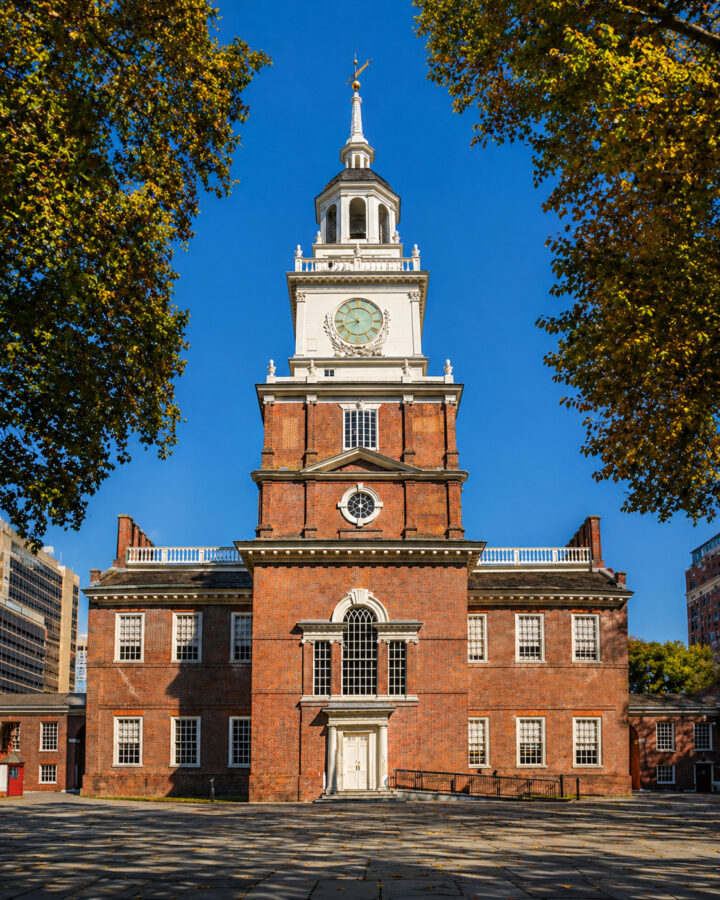
Independence Hall
At the heart of this memory lies Independence National Historical Park, often called “the most historic square mile in America.” Here stands Independence Hall, a modest red-brick building that once served as Pennsylvania’s colonial statehouse. It is not grand in appearance, yet its significance is profound. Within its walls, two documents were shaped that would change the course of history: one expressing the will of a people to be independent, the other establishing the foundation of a nation.
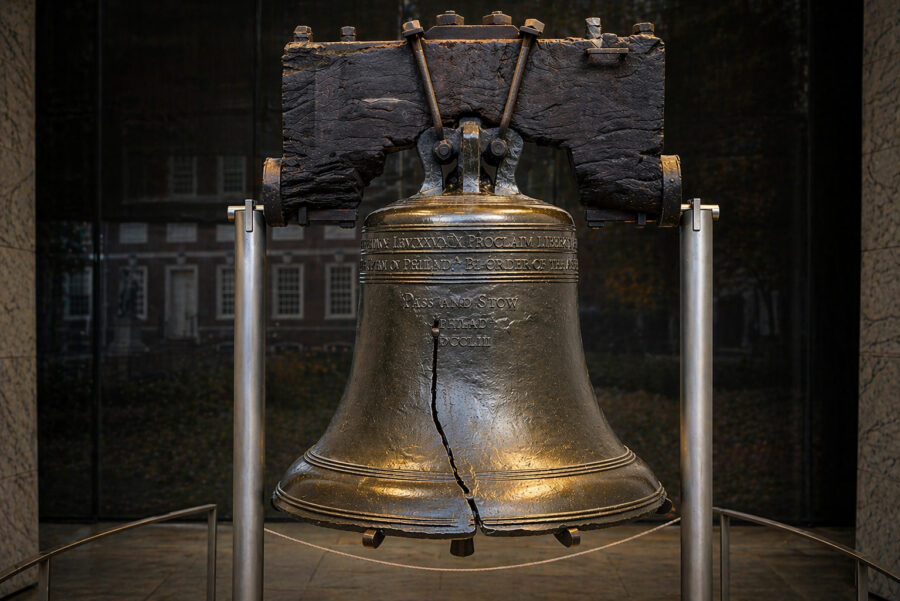
the Liberty Bell
Across the street, the Liberty Bell rests within the Liberty Bell Center. Its famous crack has transformed it into a symbol―of liberty, of struggle, and of an ideal not yet fully realized. Nearby, institutions such as the National Constitution Center and sites associated with Benjamin Franklin form a landscape that tells a larger story: the gradual transformation from colony to nation, from aspiration to governance.
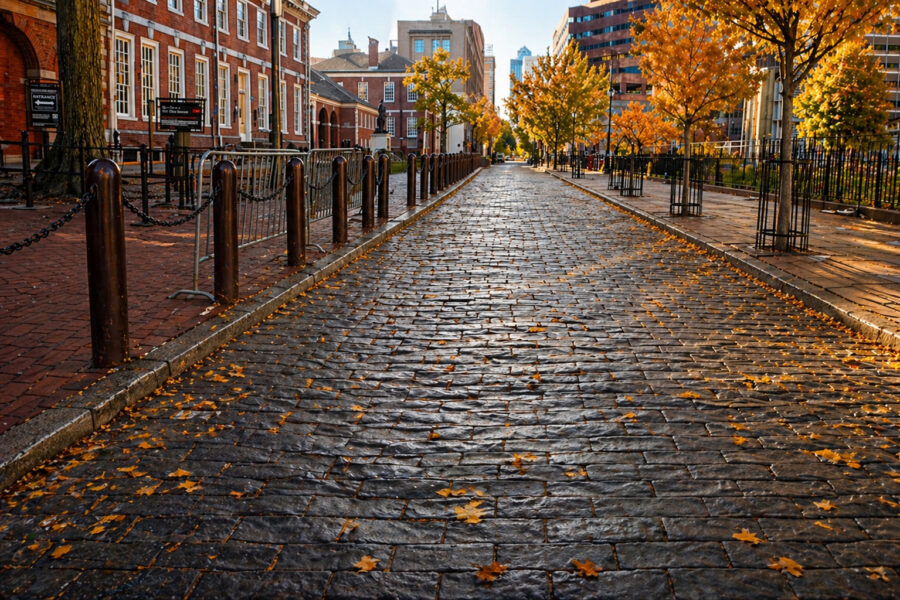
Chestnut Street
I visited again on a late autumn day.
Independence Hall stood quietly in the soft light. The red bricks, weathered by time, seemed to carry the weight of more than two centuries―of debate, hope, uncertainty, and resolve. The clock tower rose above, its steady movement a quiet reminder that history continues to unfold.
Walking along Chestnut Street, I noticed the uneven cobblestones beneath my feet, worn by generations. Fallen leaves rested between them, and sunlight traced the marks left by time. In that moment, the street felt like more than a path―it felt like a passage into memory. It connected the colonial past to the moment of independence, and the ideals of freedom to the structure of governance that followed.
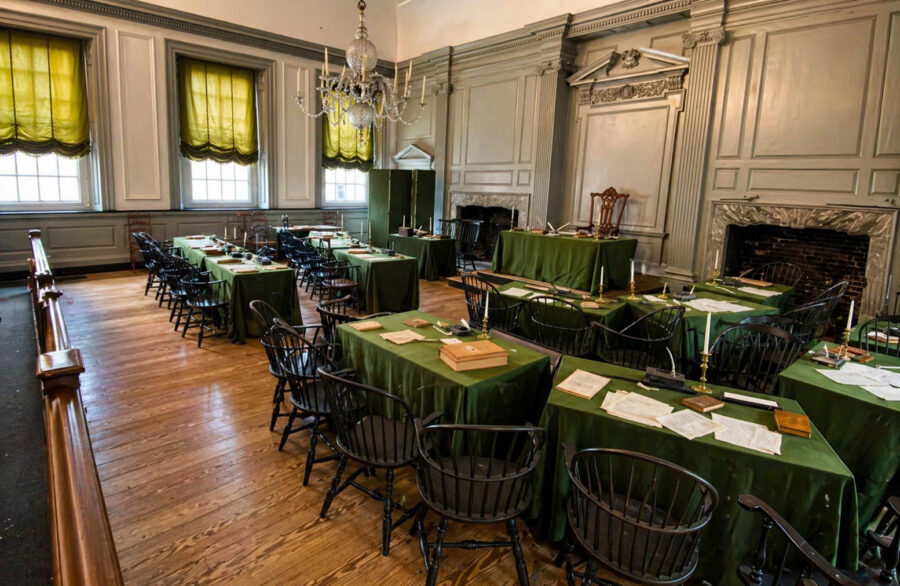
the Assembly Room
Inside Independence Hall, the Assembly Room is surprisingly simple. Wooden chairs, green-covered tables, and a central dais define the space. There is nothing extravagant here. Yet history often resides not in grandeur, but in quiet places like this.
It was here, eleven years apart, that two defining moments took place.
To understand them, one must look further back. After 1492, European powers arrived in North America. By 1607, the English established a permanent settlement at Jamestown. In 1620, the Mayflower brought Puritan settlers seeking religious freedom. Their Mayflower Compact, though brief, introduced the idea that a community could govern itself by mutual agreement.
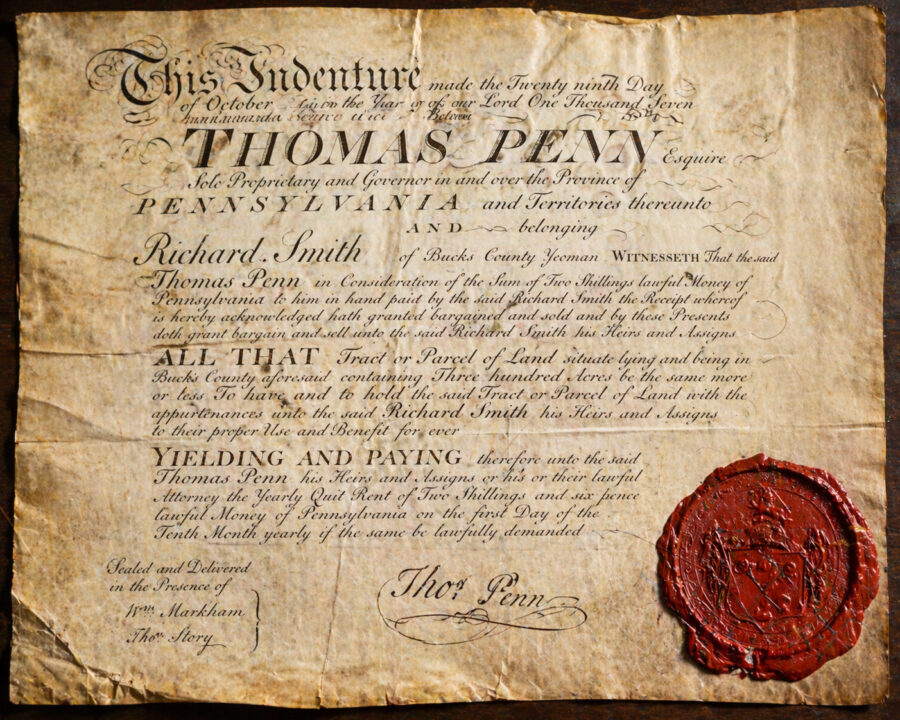
But this history was never simple. Native peoples were displaced from their lands, and enslaved Africans were brought across the ocean to labor in a society that denied them freedom. From the beginning, the ideals of liberty coexisted with deep contradictions.
By the mid-18th century, tensions between Britain and its colonies intensified. Following the Seven Years’ War, Britain imposed taxes to recover its debts. Colonists protested, insisting on representation. The Boston Tea Party made resistance visible, and by 1775, armed conflict had begun.
In 1776, representatives gathered in the Assembly Room. Many still hoped for reconciliation, but events had moved beyond compromise. A document drafted primarily by Thomas Jefferson was brought forward, debated, revised, and reshaped by voices such as John Adams and Benjamin Franklin.
On July 4, 1776, the Declaration of Independence was adopted.
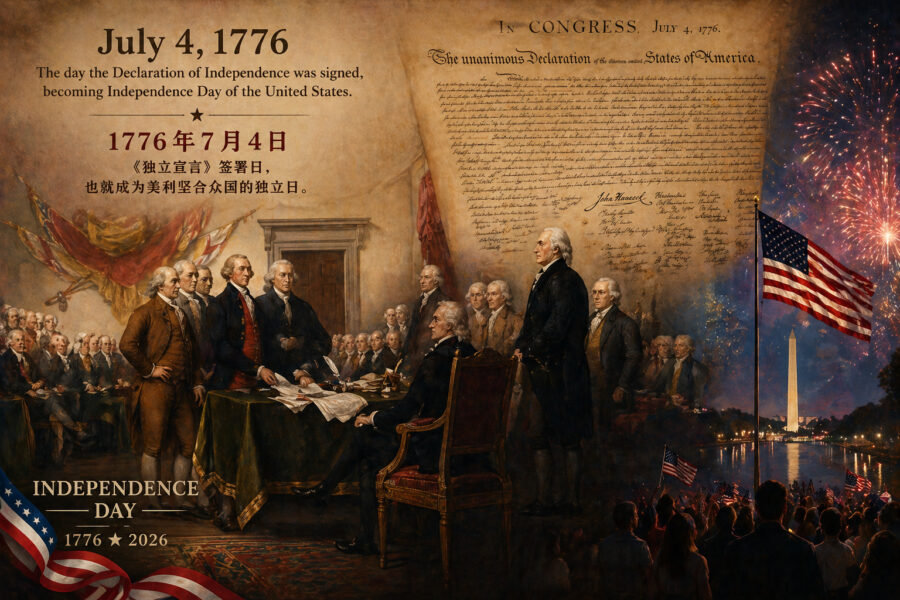
Declaration of Independence and Independence Day (1776–2026)
AI-generated and edited composite image for educational and commemorative purposes.
It did not end the struggle―but it gave it purpose.
The war continued for eight years. Only in 1783, with the Treaty of Paris, was independence formally recognized. Yet the new nation faced another challenge. Under the Articles of Confederation, the central government lacked authority. It could not effectively tax, govern, or maintain stability.
Independence had been declared, but the nation had not yet found its structure.
So in 1787, delegates returned to the same room.
This time, the question was not whether to separate, but how to build. Under the leadership of George Washington, and guided by the ideas of James Madison, representatives from twelve states debated for months. Out of 55 delegates, only 39 ultimately signed the final document.
The Constitution was not created in harmony, but through disagreement and compromise.
On September 17, 1787, the United States Constitution was signed.
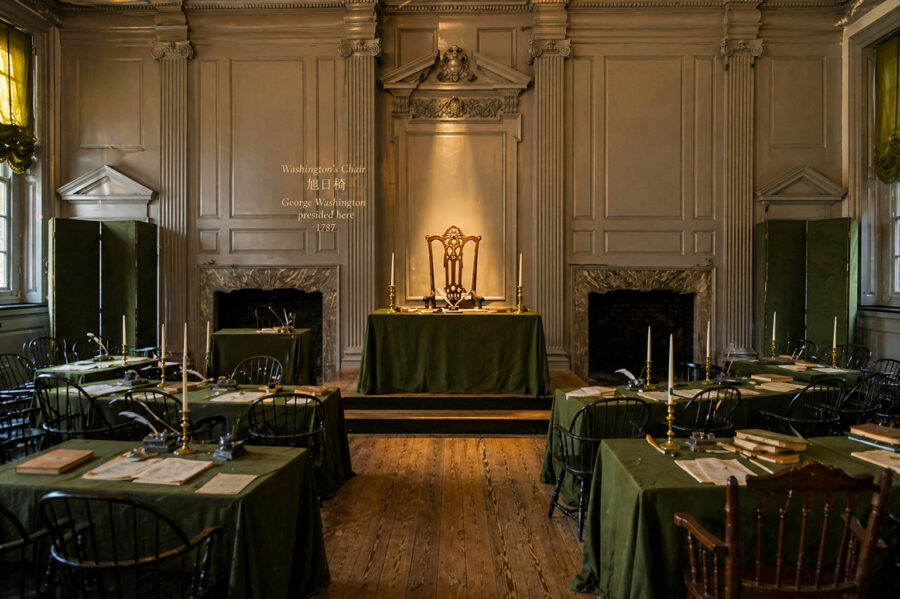
Washinton Chair
At the center of the room stands a simple wooden chair―Washington’s chair. Carved into its back is a rising sun. For much of the convention, no one could be certain whether it represented a sunset or a sunrise. Only at the end did Benjamin Franklin remark that he now knew―it was a rising sun.
That image endures.
Today, the Constitution remains the highest law of the United States. It continues to define the structure of government and the limits of power. Whether in debates over tariffs or questions of citizenship, many of today’s issues still return to its text and its principles.
It is not a document of the past alone―it is a framework still in use.
As I stepped out of Independence Hall, the autumn light remained unchanged. The city was quiet, holding its history while moving forward.
Over more than 250 years, the United States has experienced both triumph and division, promise and contradiction. As a nation shaped by diversity, its strength may lie not in the absence of disagreement, but in its ability to seek common ground―and to continue forward, even in uncertainty.
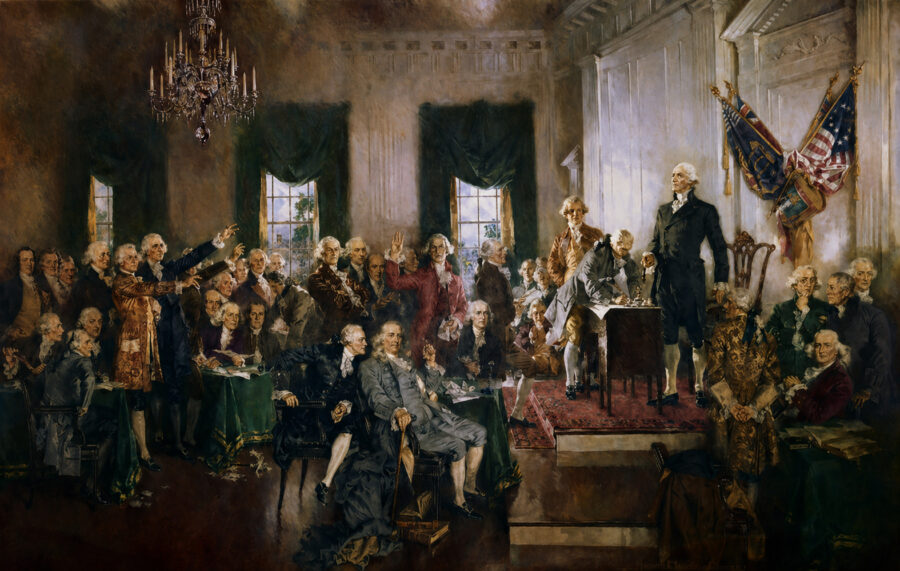
The Signing of the Constitution of the United States (1787)
After Howard Chandler Christy, 1940
AI-enhanced image. Original artwork in the public domain.
Postscript: Happy Independence Day! 🇺🇸
A late-autumn visit to Independence National Historical Park in Philadelphia brought me once again closer to the history of America’s founding. It also prompted me, as an immigrant, to reflect on this journey spanning more than two centuries.
The buildings, streets, and historical remains are no longer merely witnesses of the past; they have become threads through which one may begin to understand this nation and the diverse histories that shape it.
From these reflections, this essay gradually took shape. I offer it here, on the occasion of the 250th anniversary of American independence in 2026, to share with friends and readers. June 2026